

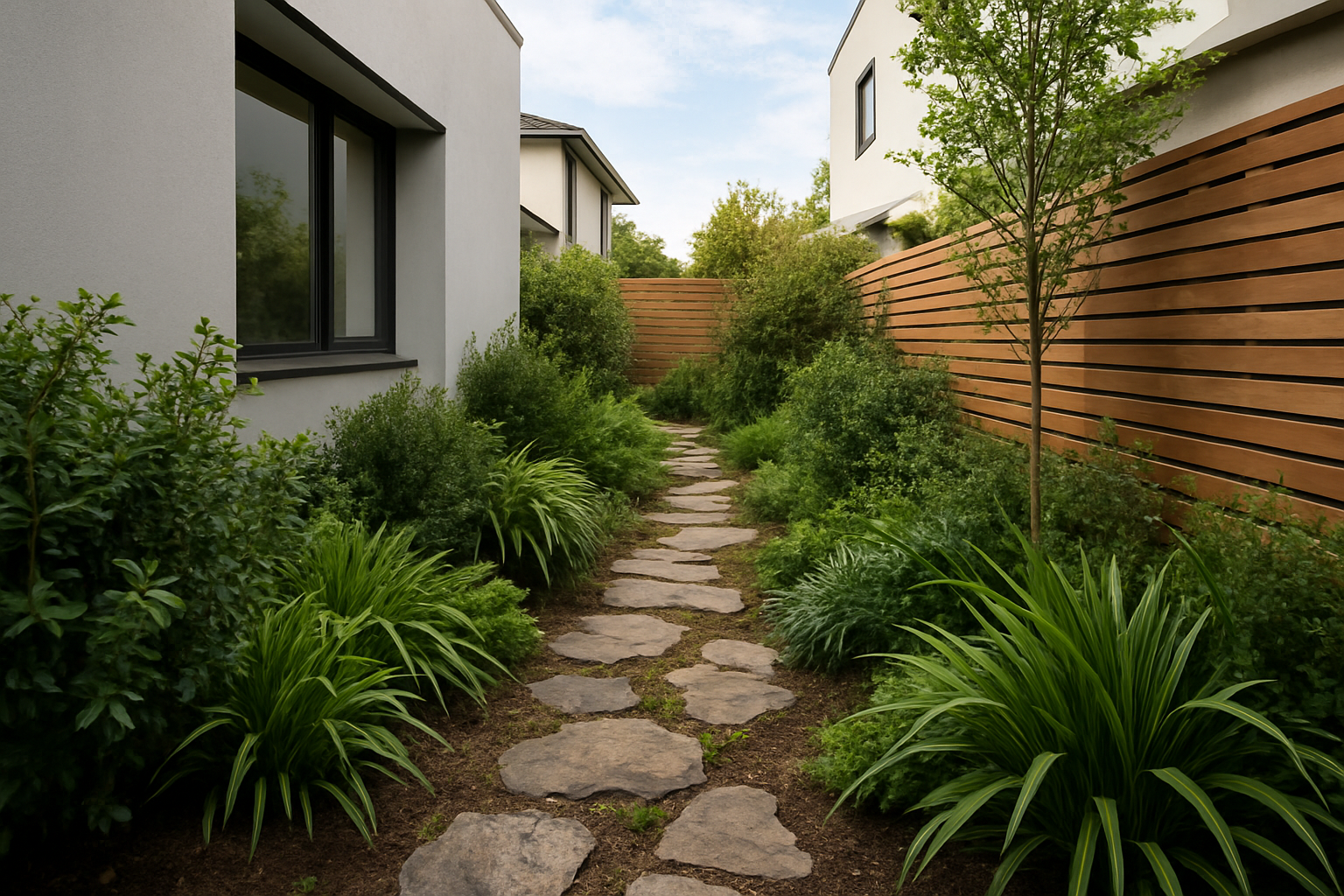
The first problem in York's homes is garden access for fencing jobs.
There is something about working in the back gardens of York’s older terraced houses that keeps you on your toes. From the street, you might see a neat row of Victorian homes with little to suggest anything unusual. Walk through the back passage, though, and you can find yourself facing a narrow garden with uneven ground, an old brick wall, three different types of fencing and barely enough room to swing a spade. These are the sorts of properties where experienced fencing contractors in York earn their money, not because the fencing itself is especially complicated, but because almost everything surrounding it can be.
I have worked on plenty of gardens where the actual fence installation was the easiest part of the job. Getting materials into the garden, removing old concrete, working around drains and establishing exactly where the boundary runs can take considerably longer than putting up the new panels.
York has a remarkable mix of older housing. Victorian terraces, Edwardian homes, former railway workers’ cottages and properties that have been extended several times over the decades. Many were built long before modern garden fencing became standard, and their outdoor spaces reflect that history.
The result is that no two gardens are quite alike. Even neighbouring houses can have completely different ground conditions, access arrangements and boundary problems.
The First Problem Is Often Getting Into the Garden
On a modern housing estate, there is usually a reasonable chance of finding a side gate or a route wide enough to carry materials through. Older terraces are a different story.
Parts of South Bank, Holgate, Bootham and the streets around the city centre have properties where rear access is limited to a narrow passage. Some have shared alleyways, while others have no outside access at all. In those cases, every fence panel, post, bag of concrete and piece of waste has to pass through the house.
That changes the job considerably.
A standard six-foot fence panel is awkward enough to carry across an open garden. Try manoeuvring one through a narrow hallway, around a kitchen island and out through a small back door. Concrete posts are even less forgiving, particularly when there are tight corners or steps involved.
I always want to know about access before quoting for this type of work. A garden might only need six or seven metres of fencing, but if every material has to be carried through the property by hand, the labour involved can be surprisingly high.
Protecting floors and door frames also takes time. Nobody wants a new fence at the expense of damaged paintwork or chipped kitchen tiles.
Where access is particularly restricted, it can sometimes make sense to build fencing in sections rather than bring in large prefabricated panels. Closeboard fencing assembled on site offers more flexibility, although the best approach depends on the available space and the structure required.
Old Gardens Have a Habit of Hiding Things Underground
One of the first lessons you learn in fencing is never to assume the ground will be clear.
This is especially true in older parts of York.
Over the years, gardens have been altered, extended, divided and landscaped. Old paths disappear beneath lawns. Brick outbuildings are demolished. Previous fences are removed, but their concrete footings remain buried.
Then somebody asks you to install a new fence along the same boundary.
You start digging and hit something solid about 200mm down.
Sometimes it is a brick. Sometimes it is an old concrete foundation. Occasionally, you uncover an entire section of buried wall that nobody knew existed.
I have come across gardens where the first few inches of soil looked perfectly normal, but underneath was a mixture of broken bricks, ash, rubble and compacted material from previous building work.
It is not necessarily a serious problem, but it makes estimating labour difficult. A post hole that takes fifteen minutes in clean soil can take much longer when old concrete needs breaking out.
This is why I am cautious about fixed prices based solely on photographs. Pictures tell you what is above ground. They rarely reveal what is underneath.
A sensible fencing contractor will explain how unexpected underground obstructions are handled before work begins, rather than presenting the homeowner with an unexplained extra charge afterwards.
York’s Soil Conditions Are Not Consistent
People often talk about York as though every garden sits on the same type of ground. It does not.
The city has a varied geological history, with areas of clay, sand, gravel and made ground. Properties near historic watercourses can present different conditions from those on slightly higher ground. Even within the same street, previous building work and landscaping can change what you encounter.
Clay-rich soil can be particularly awkward during winter. It holds moisture, becomes sticky and may soften around poorly supported fence posts. During prolonged dry weather, some clay soils shrink, which can create movement around foundations.
Sandy or loose ground presents different challenges because the sides of a post hole may collapse or provide less lateral support.
Then there is made ground, where soil has been disturbed or brought in during previous construction. Its strength can vary considerably.
For a typical six-foot domestic fence, posts are often set around 600mm deep, but that is a starting point rather than a universal specification. Exposed locations, poor ground, taller fencing and heavily loaded gate posts may require deeper or differently designed foundations.
I have seen plenty of fences fail because somebody used the same post depth on every job without considering the conditions.
A good installation should respond to the ground, not simply follow a routine.
Old Brick Boundary Walls Need Careful Handling
One feature you encounter regularly in older York gardens is brick boundary walls.
Some are attractive structures that have been standing for well over a century. Others have been repaired so many times that it is difficult to tell which bricks are original.
They can make fencing work considerably more complicated.
Homeowners sometimes want timber panels fitted above an existing wall to improve privacy. It sounds straightforward, but the wall needs to be capable of supporting the additional loads.
A solid fence panel catches wind. That force transfers through the posts and fixings into the masonry below.
If the wall is old, poorly bonded or already leaning, attaching a tall fence can make matters worse. The wall may have been perfectly adequate as a low garden boundary but unsuitable for carrying a large timber screen.
I would be particularly cautious about drilling heavy-duty fixings into weathered brickwork without checking its condition.
In some cases, independently supported fence posts are the better option. They can provide the required height without relying entirely on an ageing wall.
There is also the question of appearance. York’s older properties often have brickwork and architectural details worth preserving. A modern fence should not automatically mean removing every trace of the original boundary.
Sometimes retaining a sound wall and improving the fencing around it produces a much better result.
Shared Boundaries Can Be More Complicated Than They Look
Terraced housing naturally brings neighbours closer together, and garden boundaries can become a sensitive subject.
A fence may have been in place for thirty years without anyone questioning its ownership. Then it needs replacing, and suddenly nobody is certain who is responsible.
I regularly hear assumptions about which side of the garden belongs to which property. Some people believe the left-hand fence is always theirs. Others insist ownership depends on which way the posts face.
Neither is a reliable rule.
Property documents may provide useful information, but they do not always settle the precise position or ownership of a boundary. Where there is genuine uncertainty, it is sensible to establish the facts before work begins.
This matters particularly in narrow gardens, where moving a fence by even a small amount can affect the usable space.
There is also access to consider. A contractor may need temporary permission to work from the neighbouring side, especially where a wall, shed or established planting makes installation difficult.
A polite conversation before the job usually saves trouble later. It is far better than discovering halfway through that the neighbour objects to the new fence height or the proposed position.
Where work affects a shared or party wall, additional legal requirements may apply. Those should be checked before altering the structure.
Small Gardens Make Fence Height More Important
Privacy is one of the main reasons people replace fencing in older terraced gardens.
With houses close together, rear windows often overlook neighbouring properties. A low boundary may offer very little screening, particularly where gardens sit at different levels.
The obvious response is to install taller fencing.
That can work, but height needs careful thought in a small space.
A solid six-foot fence on both sides of a narrow garden can make it feel enclosed. If the garden already receives limited sunlight, taller panels may create more shade.
I have seen small courtyards where replacing an old four-foot fence with a much taller solid boundary made the whole space feel noticeably darker.
That does not mean privacy should be sacrificed. It means the design deserves consideration.
A combination of solid fencing at lower level and lighter screening above can sometimes work better. Slatted panels may allow more light and airflow, although the gaps will not provide the same privacy from every viewing angle.
The direction of sunlight matters too. A fence on the southern side of a small garden can have a greater effect on shade than one positioned elsewhere.
Before recommending a particular height, I would want to understand how the homeowner uses the space and what they are trying to screen.
In England, fence height can also be subject to planning limits, particularly beside highways and at listed properties. Conservation area restrictions and other local controls may affect proposed work, so it is worth checking before making significant changes.
Existing Garden Levels Are Rarely Straightforward
Older gardens have often been altered gradually rather than redesigned as a single project.
One owner adds a patio. Another builds raised beds. Somebody else levels the lawn or installs decking.
After several decades, the original ground levels can be difficult to identify.
This creates problems for fencing because a boundary that appears level from one side may be much higher on the other.
I have worked on gardens where one neighbour’s patio sat considerably above the adjoining lawn. The fence effectively separated two different ground levels, with soil pressing against the lower boards.
Ordinary timber fence panels are not designed to retain substantial amounts of earth.
If the difference in height is significant, a proper retaining structure may be needed. The fencing can then be installed above or alongside it, depending on the design.
Simply burying timber boards against the higher ground is asking for premature decay.
Water also tends to collect at the lower side of badly planned landscaping, particularly where drainage has been altered.
When replacing fencing in these situations, it is worth examining the wider garden rather than treating the boundary as an isolated feature.
The Problem With Reusing Old Fence Foundations
Homeowners sometimes ask whether existing concrete footings can be reused.
It is an understandable question. Breaking out old concrete is hard work, and disposal adds to the cost.
Occasionally, existing foundations can be suitable for a new system, but only after checking their condition, dimensions and compatibility.
The difficulty is that many older fence foundations were never particularly substantial.
A post might have been set in a narrow hole with a small amount of concrete around it. The fence remained standing for years because the garden was sheltered, not because the foundation was especially good.
Replacing the old panels with heavier or taller fencing changes the loads.
What supported a lightweight four-foot fence may not be adequate for a solid six-foot replacement.
I am particularly wary of installing new posts into deteriorating concrete simply because it saves digging.
If the foundation is cracked, loose or badly positioned, keeping it can create problems from the outset.
There are times when removing the old footing and starting again is the sensible choice, even if it takes longer.
Choosing Materials That Suit an Older Property
There is no reason an older terraced house cannot have modern fencing.
The question is whether the material suits the property and the practical demands of the garden.
Traditional closeboard fencing remains a strong choice for many York homes. It offers good privacy, can be built to suit awkward dimensions and works well with brick boundaries.
Feather edge boards also allow more flexibility than standard panels when dealing with uneven ground or unusual post spacing.
Prefabricated panels are useful where access and dimensions permit. They can make installation quicker, although narrow gardens sometimes require custom sections.
Composite fencing is another option, particularly for homeowners who want to reduce regular painting or staining. However, composite systems vary in appearance, cost and fixing requirements.
A very modern composite fence may look excellent alongside a contemporary extension but feel less appropriate against an old brick courtyard.
That is a matter of taste, of course.
My preference is to choose a material that looks right, performs properly and can be maintained without unnecessary difficulty.
There is little value in fitting an expensive fencing system if its posts cannot be installed correctly because of access or underground obstructions.
Garden Gates Are Often the Most Awkward Part
Gates in older terraced properties deserve particular attention.
Many rear gardens have narrow openings that were never designed for modern wheelie bins, large garden furniture or regular deliveries.
An old gate may have been made to fit an irregular brick opening. Over time, the hinges move, the frame drops and the timber swells.
Replacing it with a standard-sized gate is not always possible.
Sometimes the opening is out of square. Sometimes the supporting wall is uneven. Occasionally, the gate has to open in a particular direction because of steps or limited space.
These details need measuring properly.
The supporting structure matters as much as the gate itself. A heavy timber gate attached to weak masonry or an undersized post will eventually cause trouble.
For older properties, a made-to-measure gate can be worth the additional cost because it allows the opening to be used properly without forcing a standard product into an unsuitable space.
I would also consider future access. If the garden is likely to be landscaped or extended, a slightly wider gate could make moving materials much easier.
Repairing an Old Fence Can Be the Better Choice
Not every ageing boundary needs replacing.
Some older fences were built with substantial timber and decent foundations. They may look weathered but remain structurally sound.
I have seen old closeboard fencing where the posts and rails were still solid, despite the boards looking tired.
Replacing a few damaged boards, renewing fixings or repairing a gate can extend the useful life of the fence without disturbing the rest of the garden.
This is particularly valuable where access is difficult or established planting would be damaged by a complete replacement.
A proper assessment of existing fence repairs should consider the condition of the posts, rails, boards and foundations separately.
If only one part has failed, replacing everything may be unnecessary.
On the other hand, repeatedly repairing rotten posts can become expensive. Once several sections are failing, a new installation may offer better value.
The difficult part is knowing where that point lies.
An experienced contractor should be able to explain the options without automatically recommending the most expensive one.
Why Quotes for Similar-Sized Gardens Can Be Very Different
This is something that regularly confuses homeowners.
Two gardens might each need ten metres of fencing, yet the quotations can differ considerably.
The reason is often everything surrounding the installation.
One property has straightforward side access, clear ground and an existing fence that comes out easily.
The other has a narrow hallway, buried concrete, an old brick wall, uneven ground and established planting that needs protecting.
The materials might be almost identical.
The labour will not be.
Disposal is another consideration. Old timber, broken concrete posts and gravel boards have to be removed and taken to an appropriate waste facility.
In restricted gardens, carrying waste out can take longer than removing the fence itself.
This is why I would be cautious about comparing quotations based only on a price per metre.
A useful quote should explain what is included, how the old materials will be handled and whether any obvious access problems have been allowed for.
Unexpected underground obstructions are harder to price in advance, but the contractor should explain how those situations would be dealt with.
A cheap quotation that ignores half the practical work is not necessarily good value.
Winter Makes Restricted Access Even Harder
Late autumn and winter add another layer of difficulty to fencing work in older gardens.
The ground is wetter, daylight hours are shorter and narrow passages can become slippery.
Heavy clay sticks to boots and tools. Wet timber is more awkward to handle. Carrying materials through a house requires extra care to keep floors clean and safe.
None of this means fencing cannot be installed during winter.
Plenty of work can be completed successfully throughout the colder months.
But conditions need to be considered.
Concrete products have temperature and curing requirements. Frozen ground can make excavation unsuitable, while saturated soil may need additional care around post foundations.
In a small enclosed garden, protecting existing paving and keeping access routes clear can become just as important as the installation itself.
I would rather allow an extra day for difficult conditions than rush a job and leave the homeowner dealing with the consequences.
Older Gardens Often Need a More Flexible Approach
One of the things I enjoy about working on older properties is that they rarely allow you to follow exactly the same method every time.
A modern garden with clear access and regular dimensions can be relatively predictable.
An older York terrace might require three different approaches along the same boundary.
Perhaps the first section needs new posts set into open ground.
The next section runs alongside an old wall that must be retained.
Then the fence steps down beside a raised patio before finishing at a narrow gate.
Trying to force a standard panel system into every part of that layout can create awkward gaps, poor alignment and unnecessary compromises.
Sometimes building sections individually is the better approach.
It takes more measuring and cutting, but the finished result can fit the property far more naturally.
This is particularly true where boundary walls are not perfectly straight or the garden narrows towards the rear.
A small difference in width may not seem important on paper, but it becomes obvious when rigid panels are installed against an irregular boundary.
What I Would Check Before Starting Work
If I were assessing fencing at an older terraced property, I would begin with the practical issues rather than the appearance of the new panels.
First, I would establish how materials can reach the garden. That includes checking passage widths, door openings, steps and any shared access arrangements.
Then I would inspect the existing boundary. Are the posts sound? Is there an old wall? Does the fence follow the correct line? Are there signs of previous repairs or movement?
Ground conditions come next. I would look for drainage problems, changes in level, tree roots and any visible evidence of buried structures.
Only then would I start discussing the most suitable fencing system.
The homeowner might have a particular style in mind, and that is fine. But the design has to work with the property.
I would also ask about future plans.
Is a patio being replaced?
Will a garden office be installed?
Are raised beds planned?
Does the gate need widening?
There is little sense installing a new fence now if another contractor will need to disturb it six months later.
A Good Fence Should Look as Though It Belongs There
York’s older terraces have a character that is easy to spoil with poorly considered alterations.
That does not mean every garden needs traditional timber fencing or that modern materials should be avoided.
It means the boundary should be treated as part of the property rather than something separate from it.
A neat closeboard fence can sit comfortably beside old brickwork. A carefully designed slatted screen can work well in a modernised courtyard. Existing walls can sometimes be retained and incorporated into a new layout.
The important part is getting the proportions, materials and installation right.
I have seen expensive fencing look awkward because nobody considered the building behind it. Equally, I have seen fairly modest timber fencing improve a tired garden enormously simply because it was properly measured and fitted.
Good workmanship is not always about using the most expensive products.
Quite often, it is about solving the awkward details that other people overlook.
The Best Solution Is Rarely the Quickest One
There is a temptation with small gardens to assume fencing should be a quick job.
After all, there may only be a handful of panels to replace.
But the length of the fence tells you very little about the difficulty of the installation.
A short boundary behind a Victorian terrace can involve more preparation than a much longer fence in an open garden.
Restricted access, old masonry, buried rubble and uneven levels all demand time and care.
The aim should not be to get the panels standing as quickly as possible. It should be to leave a fence that fits the property, remains stable and can be maintained without creating problems for the homeowner or neighbours.
For anyone living in an older York terrace, my advice is to have the whole boundary assessed before choosing materials or agreeing to a price.
You may find that the existing fence only needs a few repairs. You may discover that old foundations need removing or that a different fencing system would suit the garden better.
Either way, understanding the problems before work starts is far easier than discovering them halfway through.
I have always found that the awkward jobs are the ones where preparation matters most. Give me a narrow garden with old brickwork, difficult access and a few surprises underground, and I would much rather spend an extra hour working out the right approach than spend the next ten years wondering why the fence never sat properly.
York’s older houses have already stood for generations. The fencing around them deserves a little thought too.
The Short Version
- Gardens in York’s older terraced houses often have limited access, requiring fencing materials to be carried through the house instead of being delivered directly to the site.
- Fencing contractors in York must be prepared for hidden obstacles underground, such as old concrete footings and buried walls, which complicate installation work.
- Soil conditions in York vary significantly, with different areas having clay, sand, gravel, or made ground that affects the stability and installation of fencing.
- Unexpected underground obstacles can lead to increased labor costs, making it essential for contractors to estimate based on site conditions rather than solely on photographs.
- The depth of fence posts in York needs to be adjusted according to local soil conditions, as using a uniform post depth can lead to fencing failures.
- Older properties in York often feature brick boundary walls which require careful handling during fencing projects.