

The situation of housing in the urban cities is ever evolving due to the changes in the cities responding to the environmental demands, population growth,…
The situation of housing in the urban cities is ever evolving due to the changes in the cities responding to the environmental demands, population growth, and the altered lifestyles demands. The modern residential planning has assumed a major concern on the dimensions of sustainability, efficiency, and communal wellbeing. This trend is evident in developments like Tengah Garden Residences and Promenade Peak, where the developers have been keen on making their developments livable instead of appealing to the short term. Such projects illustrate the fact that careful planning can minimize the negative effects on the Environment and maximize comfort in everyday life.
Incorporating Nature in Urban Architecture.
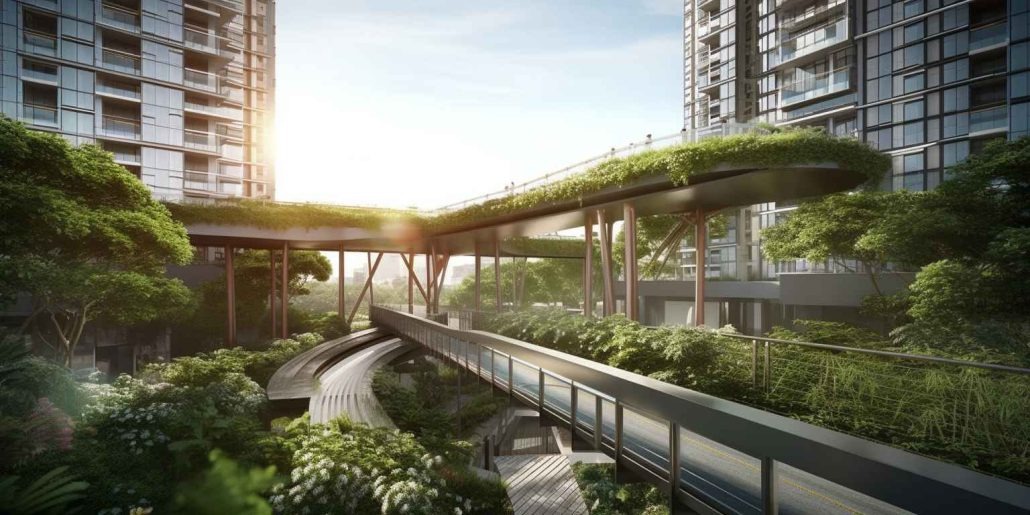
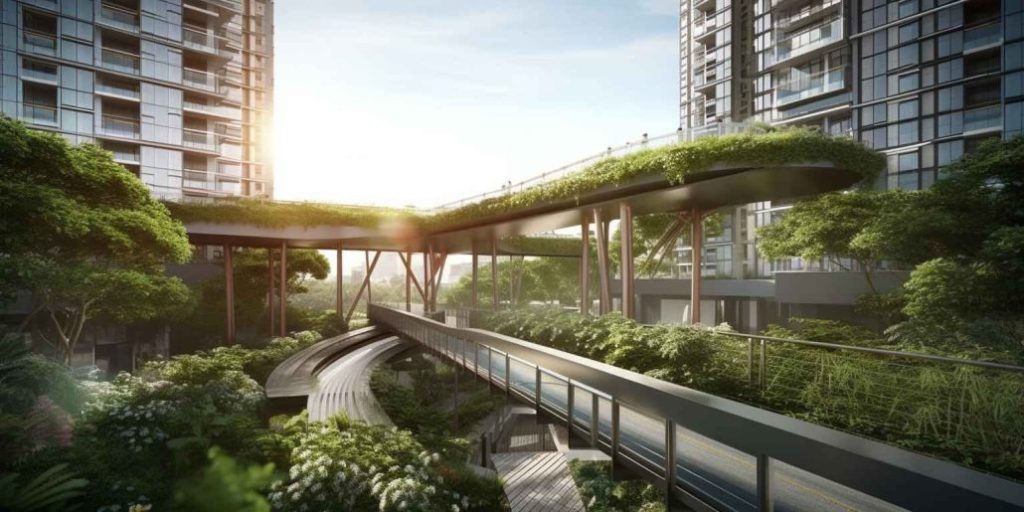
A continuous connection of the natural elements with the architectural design is one of the main principles of sustainable housing. Green corridors, open courtyards and natural ventilation systems are no longer luxurious options. At Tengah Garden Residences, the planners focus on greenery as an element that is both useful and an addition and no longer ornamental. In the same manner, Promenade Peak brings out the importance of accessibility of outdoor spaces in favor of healthier lifestyles. Combining the buildings with the landscapes around them, these developments will decrease the heat accumulation, enhance the quality of air, and provide residents with relaxing living conditions, which will positively affect their health and mental state.
Energy-efficient as a Design Strategy.
Green buildings are significant in the design of the next-generation houses. The sustainable homes will be designed to reduce the use of power by orienting, insulating and installing efficient systems. The design used in Tengah Garden Residences maximizes daylight and minimizes the heat gain that is not necessary. Simultaneously, Promenade Peak demonstrates a strategy of lighting, ventilation, and common facilities optimization to reduce energy consumption. Not only will these deliberations decrease the environmental burden, but also lead to long-term economic benefits; thus, sustainability will be an environmental and economic benefit for homeowners.
Sophisticated Space Design in Contemporary Life.
Another necessary feature of sustainable urban housing is efficient use of space. The contemporary trends are meant to aid in a comfortable living without having to be wasteful. Tengah Garden Residences shows that proper layout planning can help a family to live in small spaces, work remotely, and socialize. Promenade Peak operates under the same concepts of focusing on the functional interiors that can be adjusted to changing lifestyle demands. This also minimizes wastage of materials, and residents have convenient and comfortable living areas that do not compromise their day-to-day lives.
Residential Environment based on Community.
Giving sustainability to buildings does not only entail physical built-in structures but also involves social well-being and interplay with the Community. City houses are becoming more communal while still keeping their privacy. Tengah Garden Residences will encourage communal areas to enable people to interact with each other and feel like they belong to the place. On Promenade Peak, there are shared areas that are well-located so as to promote interaction without compromising individual comfort.
Future-proof and Availability infrastructure.
The residential planning is also progressive and considers the accessibility and flexibility. The houses will be sustainable and that will make them useful in different stages of life and the needs of the city. Tengah Garden Residences represents this philosophy in the layouts and infrastructure responsiveness to the dynamic mobility and residential needs. The Promenade Peak is an embodiment of such a forward-thinking as it appreciates connection, walking access, and circulation.
Conclusion
The increased emphasis on sustainability signifies a distinct shift in the concept and provision of urban homes. Tengah Garden Residences and the Promenade Peak are examples of the ways in which responsible design can contribute to the improvement of the quality of life, and environmental issues can be resolved. These developments are a new standard of living in cities by integrating nature and efficiency in energy and smartness in planning, and focus on the Community. Such principles will be very crucial as the cities continue to expand in order to come up with resilient, comfortable, and sustainable residential places for future generations.